What Sally Taught Me About Wasp Stings, For Humans Too
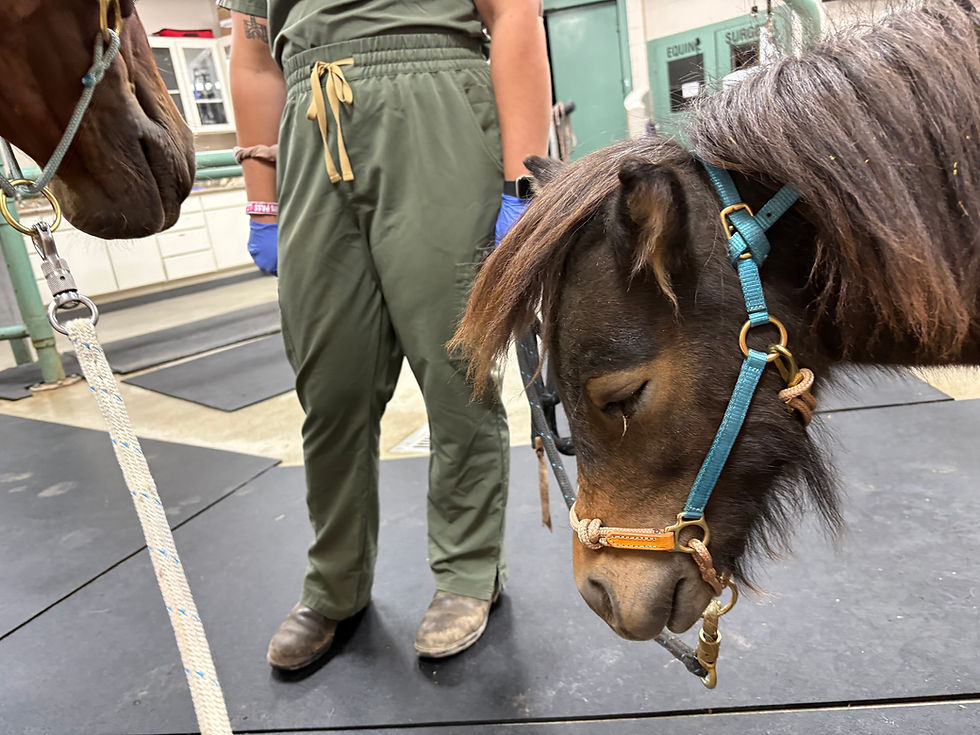
This week our emotional support mini, Sally, ended up in the ICU at Bend Equine Medical Center after multiple wasp stings triggered a severe allergic reaction. Her face swelled shut within hours. Watching her fight through it as an emergency physician who couldn't fix it myself was humbling, and it reminded me how fast a sting can turn into an emergency, in animals and in people.
Good news first. After a rocky few days, Sally is finally turning the corner. Her vitals have stabilized, her labs are improving, and we're hopeful she'll be home with us in a few days. Thank you for every good thought sent her way this week.
Wasps have been especially bad in Central Oregon this year, and most stings cause nothing more than pain, redness, and swelling at the site. That kind of reaction is uncomfortable but not dangerous. Ice, elevation, and an over the counter antihistamine usually handle it fine. Research suggests that second generation antihistamines like cetirizine, loratidine, and fexofenadine are more effective and have fewer side effects than diphenhydramine (Benadryl). Antiinflammatories such as ibuprofen or naproxen can also be helpful for the pain and swelling.
A true allergic reaction is different, and it moves fast. Watch for swelling away from the sting site, especially in the face, lips, or throat. Hives spreading across the body, trouble breathing, wheezing, dizziness, nausea, or a feeling of impending doom are all signs of anaphylaxis. These symptoms typically show up within minutes of the sting, though they can occasionally be delayed.
If someone you're with has known allergies and carries epinephrine, use it immediately at the first sign of a systemic reaction. Don't wait to see if it gets worse. Call 911 right after, even if symptoms start to improve, because a second wave of reaction can follow the first. Antihistamines are not a substitute for epinephrine in a true anaphylactic reaction. They work too slowly and don't address the airway swelling or blood pressure drop that make anaphylaxis life threatening.
One newer option worth knowing about is Neffy, a needle free epinephrine nasal spray approved by the FDA. It delivers the same medication as an auto injector, but as a single spray into one nostril instead of an injection into the thigh. Neffy comes in a 2 mg dose for anyone weighing 66 pounds or more, and a 1 mg dose for children weighing between 33 and 66 pounds. If symptoms don't improve or come back after five minutes, a second dose can be given into the same nostril. A significant number of people hesitate to use a needle, especially on a child, and that hesitation costs precious minutes. For families who have avoided carrying epinephrine because of needle fear, Neffy is a real option to bring to your doctor.
Know the warning signs before you're near a nest
According to a University of Idaho Extension guide on yellowjackets, hornets, and paper wasps, these insects are triggered into attack mode by vibrations near their nest, so lawn mowers and weed trimmers can unknowingly set off an underground colony. For Sally, she loves to rub her rump on the panels, and I'm sure that's what triggered her attack. Dark, moving shapes near a nest opening can also provoke an attack, which is part of why these insects seem to target people who walk or move quickly nearby without realizing a nest is there.
Late summer is the highest risk window. As natural food sources become scarce, these wasps forage more aggressively for meat and sugary foods, and they defend their nests more vigorously as new queens and males are being produced. That lines up almost exactly with what's happening in our own pasture right now.
What to do if you're swarmed
The Extension guide offers clear, practical advice for anyone caught near an active nest.
If you haven't been stung yet and the insects seem calm, walk backwards slowly, keeping your eyes on the nest. Moving quickly triggers more stinging, since wasps react to fast, dark silhouettes.
If a wasp lands on you, flick it away gently. Don't swat it and don't crush it, since a crushed or swatted wasp releases an alarm pheromone that calls in more workers to attack.
If you hear loud buzzing or you've already been stung, run. Cover your eyes, nose, and mouth with your hands or shirt, and get inside a building or vehicle as fast as you can, or keep moving until the wasps stop chasing you. Agitated colonies can pursue people for several hundred feet. Don't run into trees or shrubs for cover, since you can end up trapped and surrounded there instead of escaping.
Seek emergency care right away if you're stung inside the mouth, if you're stung multiple times, or if you develop hives spreading across your body, trouble breathing, or dizziness.
Prevention around the barn
This is exactly where I went wrong. I never thought to check inside the drain holes of our Powder River panels, and that's where the nests were hiding. I have always kept an eye out for wasps around our farm, but now I've added "shake all of the panels and check for wasps" to my daily pen inspections.
Inspect fence panels, eaves, sheds, and equipment for small nest openings before the height of summer, especially anywhere with hollow tubing, gaps, or cavities.
Keep an eye out during routine chores rather than only when you notice active flight, since underground and hidden nests can grow large before anyone spots them.
Reduce food sources around barns and paddocks, since spilled grain, manure, and standing water can all attract foraging wasps.
Leave large or hard to reach nests to a pest control professional rather than attempting removal yourself, since sting hazard during nest destruction is high.
If you or someone in your family has ever had a serious reaction to a sting, talk to your doctor about carrying epinephrine, whether that's a traditional auto injector or neffy, and keep it somewhere easy to reach, not buried in a bag or a barn tack room drawer. An allergist can also test for venom allergy and discuss whether immunotherapy makes sense for your risk level.
Out at the barn or on the trail, stings are going to happen. Knowing the difference between a normal reaction and an emergency, knowing how to respond if you're swarmed, and knowing your treatment options is what lets you respond calmly instead of panicking. It might be what keeps someone safe until help arrives.
For more on urgent care access and how PresenceMD supports patients through emergencies big and small, visit www.presencemd.net.
Source: University of Idaho Extension, Homeowner Guide to Yellowjackets, Bald-Faced Hornets, and Paper Wasps (BUL 852).

Comments