Bad Air Isn't Just Bad For Your Lungs. It's Bad For Your Brain
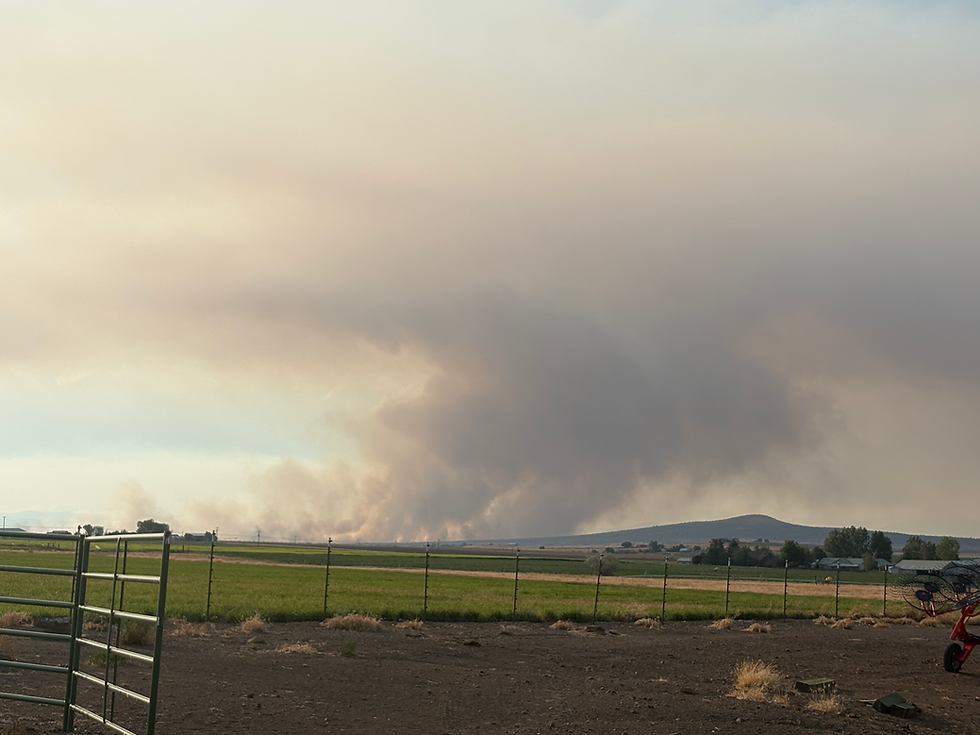
Our show got canceled this weekend because of poor air quality, and I know a lot of you were frustrated. I was too. I just want to camp out in my horse trailer, hang out with cool people, and ride horses. The show organizers did the hard thing, which is also the right thing. Keeping our animals and our humans healthy has to be our highest priority.
I want to use this as a teaching moment, because "the air is bad today" is one of those warnings people tend to shrug off. It shouldn't be shrugged off. Smoke and particulate pollution do measurable, documented damage, and the damage isn't limited to your lungs. The main villain in wildfire smoke and general poor air quality is fine particulate matter, called PM2.5. These particles are smaller than 2.5 microns, which means they slip past your body's normal filtering systems in your nose and upper airway. They travel deep into your lungs. Some of them cross into your bloodstream and circulate to other organs. This is why "just wear a bandana" doesn't cut it. A regular mask or scarf can't stop particles this small. You need an N95 or better if you're going to be outside in heavy smoke for any length of time.
If you or your kid has asthma, bad air quality days are genuinely dangerous, not just uncomfortable. PM2.5 irritates and inflames the airways directly, which triggers bronchospasm. Multiple studies have shown increased emergency department visits and hospitalizations for asthma during smoke events, and the effect is worse in older adults and in populations with less access to care. I've definitely seen more respiratory symptoms on my shifts in the ED lately.
One study of pediatric asthma patients in the northeastern United States found that asthma control measurably worsened during a severe smoke summer compared to a milder one. This isn't a rare, unlucky outcome. It's a predictable physiological response to particle exposure. If your asthma action plan includes a rescue inhaler, bad air quality days are exactly when you want it within reach, not packed at the bottom of a bag in the trailer.
Here's the piece that surprises most people. Poor air quality doesn't just affect your lungs and heart. It affects how your brain performs, even after a single day of exposure.
A well known study out of the University of North Carolina used data from a brain training game to track attention scores in over ten thousand adults across the country. Higher PM2.5 exposure in the hours and days before gameplay was tied to measurably worse attention scores. The effect was strongest in the western United States, where wildfire smoke is most common, and it showed up within just a few hours of exposure.
Practically speaking, this means smoke exposure can leave you foggier, less focused, and slower to react. If you're driving a truck and trailer, handling a horse, or making split second decisions in the arena, that matters. It is one more reason a hazy, smoky day is not the day to push through a full training session just because you already planned it.
Long term exposure has also been linked to a broader list of problems, including cardiovascular disease, stroke, chronic lung disease, and an increased risk of cognitive decline and dementia related conditions over time. None of this happens from one bad air day. It builds with repeated exposure, which is exactly why treating "just this one show" as no big deal, over and over, adds up.
There's no need to guess about when to skip outdoor activity. The Air Quality Index, or AQI, gives you a number you can actually act on. Most weather apps and airnow.gov will show it for your area in real time.
AQI 0 to 50 (Good): normal outdoor activity for everyone.
AQI 51 to 100 (Moderate): fine for most people. If you have asthma or another respiratory condition, watch for symptoms and consider reducing intense exertion.
AQI 101 to 150 (Unhealthy for Sensitive Groups): this includes people with asthma, COPD, heart disease, older adults, pregnant people, and children. Sensitive groups should shorten or reschedule outdoor exertion. Everyone else can continue with normal activity but should pay attention to symptoms.
AQI 151 to 200 (Unhealthy): everyone should reduce prolonged or heavy outdoor exertion. Sensitive groups should avoid it entirely and move activities indoors if possible.
AQI 201 to 300 (Very Unhealthy): everyone should avoid prolonged outdoor exertion. Sensitive groups should stay indoors as much as possible.
AQI above 300 (Hazardous): everyone should avoid outdoor activity altogether.
For riders specifically, exertion matters. A hazy day at a walk is different from working a young horse hard for an hour, physically for you and for your horse.
Horses are also affected by poor air quality and can develop respiratory irritation and reduced performance, so this isn't purely a people problem. They also don't have the ability to come inside to benefit from air filtration, so their exposure tends to be much higher.
A canceled show is frustrating, but it's the right call when the air itself is the risk. Your lungs, your heart, and your brain all take a hit on bad air days, and the damage is real even when you can't feel it happening in the moment. Check the AQI before you plan a hard outdoor day, keep rescue medications accessible if you or your kid has asthma, and don't be afraid to scale back when the number is high. There will be other shows.
If you have questions about how air quality affects a specific health condition you're managing, reach out. That's exactly the kind of thing we can talk through together.
TL:DR on the Study
Link to the study: https://pmc.ncbi.nlm.nih.gov/articles/PMC9196888
The basics: Researchers looked at whether short term exposure to wildfire smoke and PM2.5 affects attention and cognitive performance in adults, using real world data instead of a lab setting.
Who was in the study: Over ten thousand adults across the United States who used a brain training app.
What they did: Researchers pulled attention scores from twenty rounds of an attention based brain training game for each user, then matched those scores against estimated PM2.5 and wildfire smoke exposure in the hours and days before each round of play.
The results: Higher PM2.5 in the three hours before gameplay was tied to a meaningful drop in attention score. The effect was strongest in the western United States, where wildfire smoke exposure is most common, and it showed up quickly, within hours, not just after days of exposure.
Why it matters: This shows that air pollution doesn't just affect your heart and lungs. It measurably affects attention and mental sharpness, even from short term exposure. That has real implications for anyone doing anything that requires focus and quick reactions, including driving, working around horses, or handling equipment, on a smoky day.
The catch: The study measured attention through a mobile game, not a clinical cognitive assessment, and it can't prove the smoke directly caused the drop in score, only that the two are strongly associated. People who chose to play the game on smoky days might also differ in other ways from people who didn't.
How it works (probably): PM2.5 particles are small enough to enter the bloodstream and are thought to trigger inflammation that can affect brain function, in addition to the direct irritation they cause in the lungs and airways.

Comments