Beat the Heat in the Show Ring: Fast Cool-Down Tricks for Long Sleeves and Long Pants
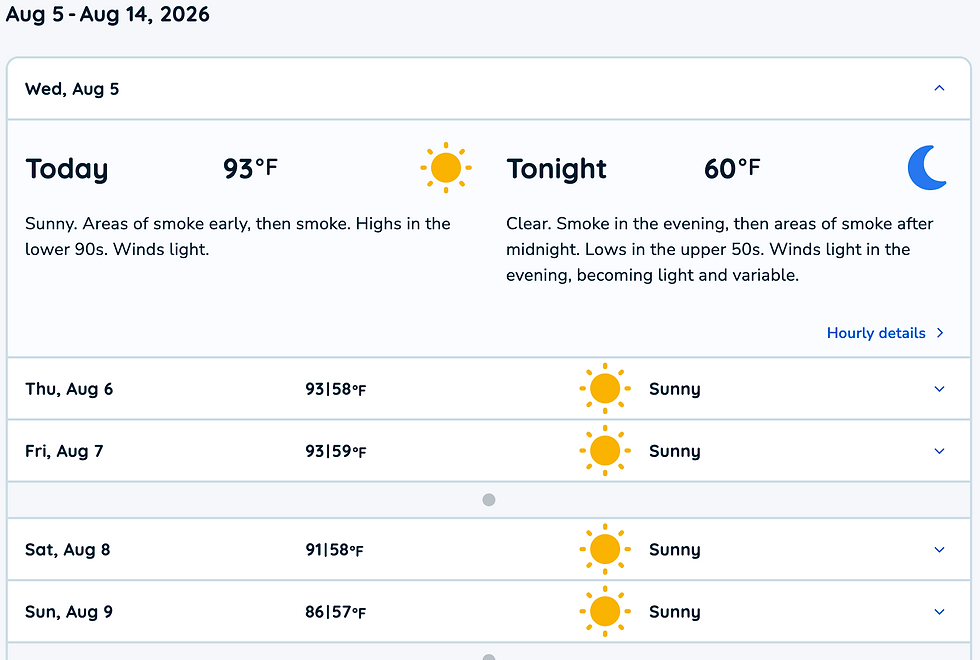
This weekend's forecast for Eugene is rough for anyone showing. Friday is hitting 9 degrees. Saturday backs off slightly to 89. Sunday finally breaks toward 85. That's three days of real heat, and none of us get to dress for it. Show attire means long sleeves, long pants, and often a hat or helmet, no matter what the thermometer says.
I see the effects of that every show season. Riders push through headaches, nausea, and dizziness because they think stopping to cool off means losing time in the warm-up pen or missing a class. Most of the time it's heat stress building quietly, and it's fixable in minutes if you catch it early.
A 93 degree day and a 93 degree day with high humidity are two very different animals. Sweat cools you by evaporating off your skin. When humidity is high, that evaporation slows down, and your body stops shedding heat the way it's supposed to. This is where WBGT comes in. WBGT stands for wet bulb globe temperature, and it's a measurement used by athletic trainers and the military to estimate how much heat stress your body is actually under. It factors in humidity, wind, and even direct sunlight on top of the air temperature, not just the number on the thermometer. It's a more honest read than the "feels like" temperature you see in a weather app, because it accounts for how hard your body has to work to cool itself in real conditions, not just how hot the air feels to you standing still. On a dusty show ground in direct sun with heavy show clothes on, your actual heat load can run well above the air temperature reading, even on a day that doesn't feel unbearable at first.
The fastest way to bring your body temperature down isn't dumping ice water over your head. It's targeting the spots where major blood vessels run close to the surface of your skin: your wrists, the sides of your neck, your temples, and behind your knees. Cool those areas and you're cooling the blood running through them before it recirculates through the rest of your body. That's a faster, more efficient cool-down than trying to lower your entire skin temperature at once.
Here's how to use that between classes.
Quick cool-down strategies for the ring
Soak a bandana or small towel in ice water and hold it against your wrists and the back of your neck for thirty to sixty seconds. Do this before you get on, not just after.
Keep a cooling towel in your tack box. These are the wrap-style towels made from evaporative fabric, and a lot of the ones marketed for horses work just as well on riders. Back on Track's Cool on Track towel is sized for both horse and human use, which makes it an easy one to keep on hand for both of you.
Consider a cooling vest under your show shirt if you're in the ring for extended periods, especially for events with long go-arounds or multiple classes back to back. Polar Products makes an equestrian-tested Kool Max cooling vest, thin enough to layer under show clothes without adding bulk, and riders on the reined cow horse and barrel racing circuits have used them for years to keep showing through the heat.
Find shade between classes. Even five minutes out of direct sun drops your working body temperature more than people expect.
Hydration is not optional this weekend. Drink water steadily through the day, not just when you're thirsty. Thirst shows up after you're already behind. Add electrolytes into the mix, because plain water alone won't replace the sodium and potassium you're losing through sweat under all those layers. A sports drink, electrolyte tablet, or even a salty snack alongside your water goes a long way on a day like Friday. Start hydrating the night before a hot show day, not the morning of.
Know the difference between heat cramps, heat exhaustion, and heat stroke
These three sit on a spectrum, and it helps to know where you are on it.
Heat cramps are the mildest form. They show up as painful muscle spasms, usually in the legs or abdomen, during or after heavy sweating. They're your body's early warning system. Stop, hydrate with electrolytes, and rest in the shade.
Heat exhaustion is the next step up. Watch for heavy sweating, cold or clammy skin, a fast weak pulse, nausea, headache, dizziness, and weakness. This is where a lot of riders push through instead of stopping, because it doesn't feel dramatic yet. It should still stop you. Get out of the sun, drink fluids with electrolytes, and cool down with wet cloths at the pulse points. Most people recover within thirty minutes if they act at this stage.
Heat stroke is a medical emergency. This is what heat exhaustion becomes if it isn't treated. Warning signs include a body temperature above 103, hot and dry or flushed skin, a fast strong pulse, confusion, slurred speech, loss of coordination, or loss of consciousness. If you or anyone around you shows these symptoms, this is not a walk-it-off situation. Get them into shade or air conditioning immediately, start cooling with any water or ice available, and get medical care right away. Heat stroke can cause organ damage within minutes.
When to come find me
If you notice heavy sweating that suddenly stops, confusion, a racing heart that doesn't settle, muscle cramping that won't ease up, or dark urine, come to the trailer. Dark urine in particular is a sign your body is under more strain than it should be, especially if you're also pushing through an intense ride in the heat. Don't wait until you're off the horse and everyone's gone home to mention it.
I'll be at Oregon Horse Center for WSSH Summer Blast, August 7-9. If the heat catches up with you or your horse, walk up. No appointment needed.
Comments