I Hurt Myself Today... A Story of the Mundane Indignities of Getting Older

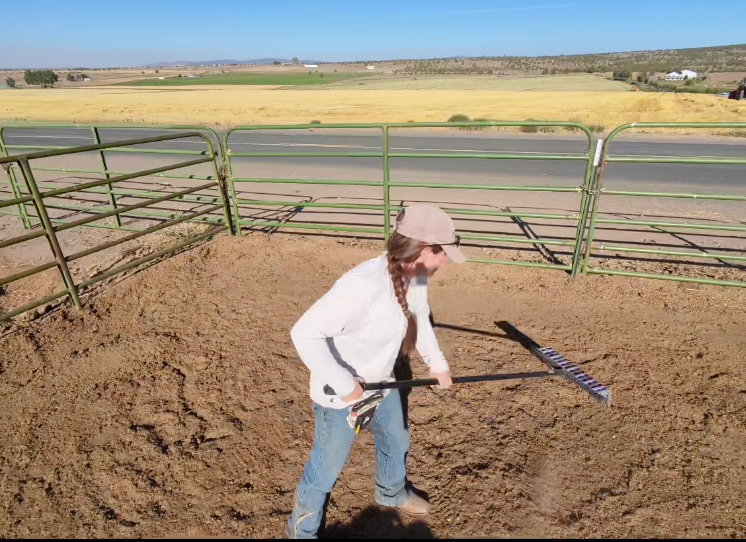
Two days ago I did what every horse person has done a hundred times. I bent, twisted, and lifted while cleaning pens, and my low back let me know about it. If you have ever felt something catch and then struggled to get up off the ground, you already know how this goes.
I see acute low back pain almost every week at the shows and in my emergency room. The American Academy of Pain Medicine just published a new multidisciplinary clinical practice guideline on how to assess and treat it. I read the whole thing, and it gives a clear answer on what helps, what does not, and when to worry. I am also living it right now, which makes me want to get the details right.
Most acute low back pain is mechanical. A sudden load, an awkward twist, or a long day of repetitive lifting strains muscles, ligaments, or the small joints that connect the bones of the spine. The area becomes inflamed and sore, and the muscles tighten to guard it. That guarding adds to the stiffness and pain. In some people a disc is involved, and that can send pain into the buttock or down the leg. The guideline’s authors point out that more than 85 percent of people with an acute episode have no specific underlying disease or spinal abnormality. Most people improve over days to weeks.
I'm managing my back pain at home, and most of the time, you can, too. Keep moving. Bed rest is no longer recommended. Staying active, as opposed to bed rest, is a cornerstone of self-care, and it found small improvements in function compared with bed rest. Gentle, low-impact activity as your pain allows is the goal. Use heat if it helps. A heating pad or warm shower is a low-risk option. If ice feels better, that's ok, too. Science doesn't give us a clear answer on this question, but it seems like either one is safe.
Consider a short course of over-the-counter anti-inflammatories like ibuprofen or naproxen when it is safe for you. NSAIDs have the best evidence for efficacy in acute low back pain, and they work better if you take them on a schedule for several days to increase their anti-inflammatory effects. Use them as labeled and with food. Talk to your doctor first if you are older, have kidney disease, a history of ulcers or stomach bleeding, heart disease, or you take blood thinners.
If oral anti-inflammatories are not safe for you, you can use topical anti-inflammatories like diclofenac gel. This is available over the counter at most pharmacies and performs almost as well as oral medications. Rub it directly on the area of pain. This is my go to for acute painful conditions!
A TENS unit is another over the counter option for acute pain. They are low risk and some small studies show improvement in pain and movement scores. I carry one in the trailer and we can use it to help get you back in the saddle at shows if you have a manure shoveling disaster like I just did.
Stretching and strengthening come next, once the sharpest pain settles. Movements that bring relief, like a gentle knee-to-chest stretch or a cat-cow, are a good place to start. Build back up gradually and hold off on heavy lifting until you are back to your normal baseline.
If home care isn't controlling your pain, it's time to see a doctor. We have multiple clinical options if your pain is not improving after about one to two weeks of self-care, or sooner if it is severe. These include:
Optimized anti-inflammatory dosing, including higher doses for a short, limited time when appropriate
A short course of a skeletal muscle relaxant, used with caution because of drowsiness and fall risk in older adults.
Physical therapy, which can help improve mobility and return to activity sooner
At the shows, I can start much of this right in the trailer, including anti-inflammatories, a TENS unit, and trigger point injections for a muscle knot that will not let go. They are one tool I use when a muscle is locked down and the rest of the plan is not enough. Most back strains can be managed well with a clear plan, and having one makes the waiting easier.
Most back pain does not need an emergency room, but there are some danger signs that you shouldn't ignore. Some back pain does. Go to the ER right away if you have any of the following:
Numbness in your "private stuff" - what is covered by your underwear
New trouble controlling your bladder or bowels, or trouble urinating
Leg weakness that is new or getting worse, or a foot that drags or will not lift
Fever or chills with back pain
Recent IV drug use
Recent spine procedure
Back pain with a history of cancer, unexplained weight loss, or severe pain that does not let up at night
Back pain after a significant injury, such as a fall, a kick, or a car accident. Trauma needs to be checked for fracture.
The guideline recommends against routine imaging for back pain that is less than six weeks old, unless warning signs are present. Why don't we want to take xrays or do MRIs early on in back pain? Several trials where people got imaging within a week or two of their onset of pain did not improve pain, function, or quality of life compared with usual care. What those early imaging patients did have was more cost, more prescriptions, more surgeries, but the same long term outcome. Imaging does make sense when red flags are present, or when pain persists beyond four to six weeks or keeps getting worse.
Back pain is hard on the body and on the plans you had for the week. If your back is out and you want a plan, request an appointment at www.presencemd.net. I will evaluate you personally and build a plan that fits your life, your barn, and your next show.
TL:DR on the Study
Link to the study: https://doi.org/10.1093/pm/pnag110 (Assessment and Treatment of Acute Low Back Pain: A Multidisciplinary Clinical Practice Guideline, Pain Medicine, 2026)
The basics: A 2026 clinical practice guideline from the American Academy of Pain Medicine on assessing and treating acute low back pain, defined as pain lasting six weeks or less.
Who it applies to: Adults with acute low back pain, with or without radiculopathy, seen in outpatient settings such as primary care, urgent care, and emergency departments. Traumatic back pain was outside its scope.
What they did: A multidisciplinary guideline group wrote recommendations based on a systematic review of the evidence, using the GRADE framework to grade the certainty of evidence and the strength of each recommendation. The review was done by the Pacific Northwest Evidence-based Practice Center at Oregon Health & Science University, with the AAPM as a partner. The project was funded by the U.S. Food and Drug Administration, and the review team reported no conflicts of interest.
The results: Routine imaging is not recommended without red flags (strong, low certainty). Self-care includes education, staying active, superficial heat, and a short course of over-the-counter NSAIDs (strong). If pain is not improving after one to two weeks, clinicians should offer one or more of: optimized NSAIDs, skeletal muscle relaxants, exercise-based physical therapy, manipulation and mobilization, or acupuncture (strong, mostly moderate certainty). For radiculopathy, steroids or epidural steroid injections may be considered (conditional, low certainty). Routine opioids are not recommended as initial treatment (conditional, low certainty).
Why it matters: It is a recent, FDA-funded guideline that directly addresses two of the most common overtreatments for back pain: routine imaging and first-line opioids.
The catch: Much of the evidence is low certainty, and many trials were small or compared treatments to placebo or usual care rather than to each other. Many trials excluded people at high risk for NSAID complications. This post is general information and is not a substitute for an exam. If you have any red flag symptoms, do not wait for an appointment.

Comments